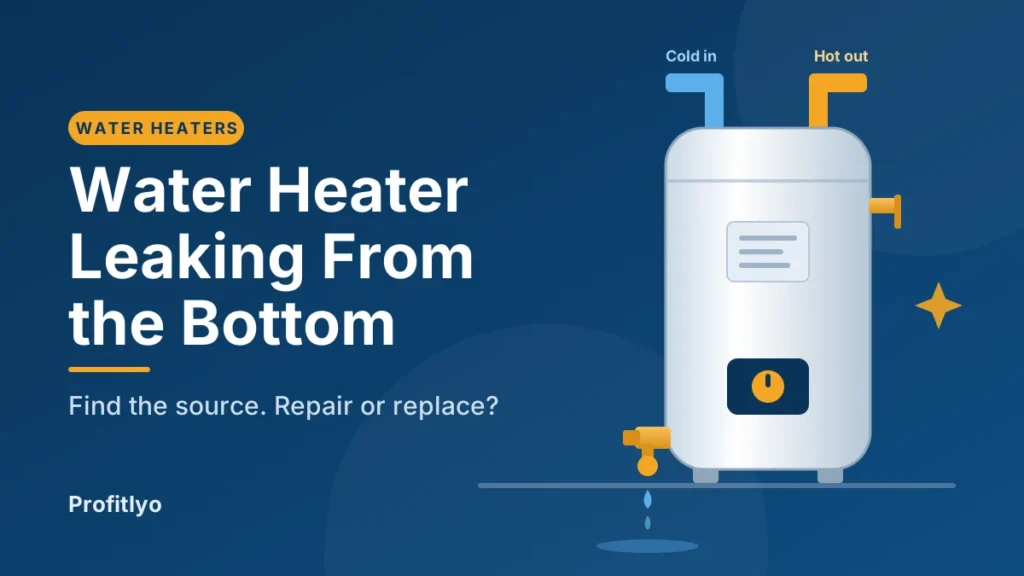
A water heater anode rod is a metal rod inside your tank that corrodes on purpose, so the steel tank doesn’t.
Check it every few years, and replace it when it is worn down to the thin core wire or coated in crust. Done in time, it is one of the cheapest ways to make a tank last longer.
I’ll explain what the rod does, how often to check it, how to tell when it is finished, and how to replace it step by step.
I’ll also cover the questions most guides skip: magnesium versus aluminum, the rotten egg smell, and whether it is even worth replacing the rod on an older tank.
Quick answer
- The anode rod protects the tank lining by corroding first.
- Check it every 3 to 5 years, or about every 3 years if you have a water softener or very hard water.
- Replace it when it is mostly eaten away, thinner than about half an inch, or the core wire is showing.
- You need a 1 1/16-inch socket, a hose and a new rod. Cut the power or gas and the cold water first.
- If your tank is already about 8 to 10 years old or more, a new rod may not be worth it. It slows corrosion, but it can’t undo it.
What does a water heater anode rod do?
Inside a tank water heater, hot water and minerals constantly attack the steel.
The tank has a glass lining, but it is never perfect, so the rod acts as a decoy.
It is made of a more reactive metal, usually magnesium, aluminum or a zinc and aluminum mix, so the water attacks the rod first and leaves the steel alone. As This Old House puts it, the water wants to attack the steel, and the rod gives it something else to go after.
Once the rod is used up, nothing is protecting the tank anymore. Rust starts, and a rusted tank eventually leaks.
If you want to see where that ends up, my guide on a water heater leaking from the bottom shows how to tell a repairable leak from a dead tank.
Every glass-lined tank ships with one, and the warranty can depend on it still being in there, so check your paperwork before removing it.
How often should you check the anode rod?
Here the advice really is all over the place.
One water heater company says to inspect every 3 to 5 years, and about every 3 years if you have a softener. A repair guide I read says every 1 to 3 years.
This Old House says every 3 to 5 years in one place and yearly in hard-water areas in another.
My advice is to pick a rule you will actually follow:
- Normal water, no softener: check it every 3 years once the tank is a few years old.
- Hard water or a water softener: check it every 2 to 3 years. Softened water uses up the rod faster.
- Tank over 3 years old and never checked: check it now.
When you flush the tank, that is a good moment to look at it. My guide on how to flush a water heater covers the draining part, and the rod comes out of the top of the tank.
If you’re weighing up a softener, keep in mind that it changes how fast the rod wears. Here’s what water softener pricing looks like before you buy.
My guide to looking after a water softener covers the basics.
Signs the anode rod is worn out
Opening the tank is the only sure way to know, but a few signs point to it:
- Discolored hot water while the cold water runs clear. It can mean the rod is gone and the tank is rusting.
- A rotten egg smell in the hot water only. That is often a reaction with the rod, though it can also be something else, and I’ll come back to it below.
- Popping or banging noises from the tank. Sediment is the usual cause, so this one is not proof.
- Rust near the fittings or the base of the tank.
What a worn rod looks like when you pull it out
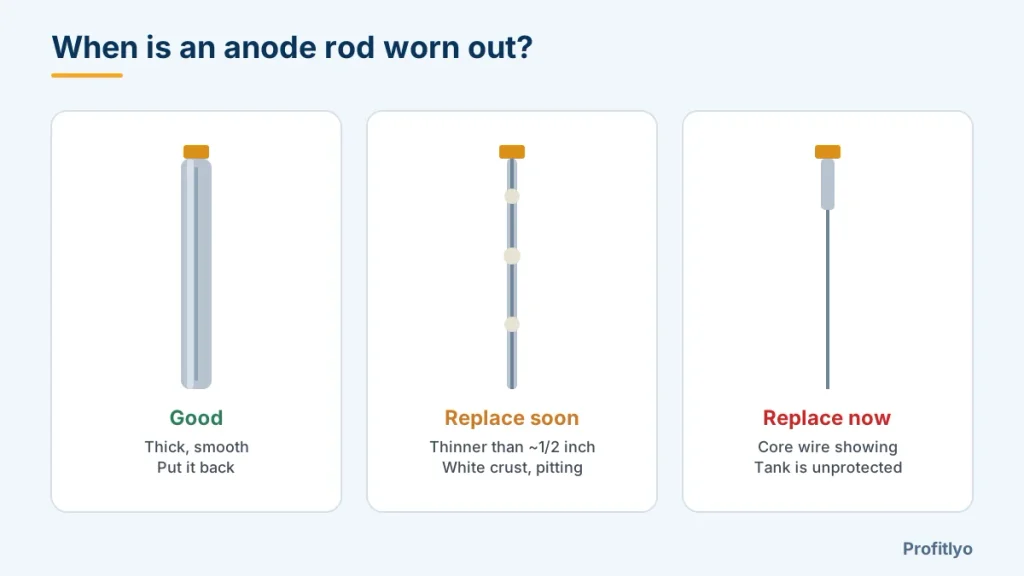
Sources give different cutoffs, so here is what they agree on. Replace the rod if:
- It is thinner than about half an inch (This Old House’s number). One guide uses a quarter inch, so a rod that thin is definitely done.
- The steel core wire is showing along a long stretch. This Old House says more than 6 inches of exposed core wire means replace it.
- It is deeply pitted or covered in a thick white crust of calcium.
A rod that is still thick, with only light wear, can go back in. If you aren’t sure, replacing a $20 to $50 part is cheaper than guessing wrong.
Should you replace the anode rod on an old tank?
This is the question most guides never ask.
If your tank is young, a new rod is a great investment.
But if the tank is already about 8 to 10 years old, one Ohio water heater company says a first replacement is often not worth it, because a new rod slows what is left but can’t reverse corrosion that has already started.
That matches my own rule of thumb:
- Under about 8 years old: replace a worn rod. It can add real years.
- About 8 to 10 years old and never serviced: I’d get a plumber’s opinion first. The tank may already be near the end.
- Already leaking from the tank: don’t bother. The tank is finished.
Check the serial number on the tank for the manufacture date if you don’t know its age.
Magnesium or aluminum? Which anode rod should you buy?
Most tanks come with magnesium. A replacement is usually one of these:
- Magnesium: the strongest protection, and usually the original rod. It gets used up faster, especially in softened water. In water that is hard, aluminum is the usual alternative.
- Aluminum or aluminum and zinc: it lasts longer and the zinc helps cut down the sulfur smell. A common choice for hard or softened water.
- Powered anode: doesn’t get used up, but costs a lot more. It is sold mainly for very aggressive water or stubborn smell problems, and it needs a power connection, so it suits only some heaters.
One thing to know before you buy.
Some of what you read online comes from companies that sell powered rods or make anodes, so take strong claims with a pinch of salt.
Your tank manual and a plumber who services your area are the better guide to what suits your water.
Aluminum also raises a question some people ask. One manufacturer’s page notes that some studies have raised questions about aluminum and health, but it draws no conclusion.
I don’t think there is a clear answer, so if it worries you, ask a plumber about the zinc and aluminum or powered options, or about your own water.
The rotten egg smell in hot water
If only the hot water smells like sulfur, a common cause is a magnesium rod reacting with harmless bacteria in the tank. Swapping to an aluminum and zinc or a powered rod often fixes it.
If the cold water smells the same, the problem is in your water supply, not the heater.
What you’ll need to replace the anode rod
- A new anode rod that matches your heater (check the manual for length and thread)
- A 1 1/16-inch socket, and a breaker bar or long handle for leverage
- A garden hose
- Teflon tape
- A bucket and towels
- A ladder or stool if your tank is tall
- A flexible, segmented rod if you have little headroom above the tank
Safety note: The water in the tank can scald. Shut off the electricity or gas first, and let the water cool. A rod that is badly stuck can twist the tank and damage pipes or the gas line, so stop and call a plumber if it won’t budge with a breaker bar.
How to replace a water heater anode rod, step by step
Step 1: Turn off the power or gas
Switch off the breaker for an electric heater. For gas, turn the control to pilot or off. Then let the water cool for a while.
Step 2: Close the cold water inlet
Close the valve on the cold supply pipe on top of the tank. Then open a hot faucet somewhere upstairs so air can get into the tank.
Step 3: Drain some water
Connect the hose to the drain valve and let out a few gallons. You only need the level to drop below the rod, not an empty tank. This Old House says to drain until the water is just below the rod.
Step 4: Find the rod and loosen it
The rod sits under a hex head on top of the tank, and some models hide it under a cap or a plastic cover. Fit the socket and turn counterclockwise.
If it sticks, add a breaker bar or a length of steel pipe for leverage, and have a second person hold the tank steady so you don’t strain the pipes. A little penetrating oil on the threads can help.
Step 5: Pull the old rod and inspect it
Lift it out slowly. If it is thin, pitted, crusted or showing a long stretch of bare wire, it needs replacing, using the checks above. If you have little headroom, you may need a flexible rod, which comes in linked sections that bend as you feed them in.
Step 6: Install the new rod
Wrap Teflon tape around the threads and lower the new rod in, taking care not to cross-thread it. Tighten it firmly with the socket. Firmly is enough, so don’t crank it past that.
Step 7: Refill, check for leaks and restore power
Close the drain valve, take off the hose and open the cold water inlet. Keep the hot faucet open until the water runs steadily without sputtering. Look around the rod for drips.
If there are any, tighten it a little or redo the tape. Only then turn the power or gas back on. For a gas heater, my guide on how to relight a water heater pilot light walks you through it if the pilot went out.
How much does it cost?
The rod itself is cheap. One repair guide puts a DIY replacement at about $20 to $50 and a professional job at about $100 to $300.
One Ohio company I looked at lists a standard anode service at $249 and a longer-life rod at $149 where it fits, and quotes a powered anode at $349. Prices vary a lot by area, so treat these as examples rather than a rule, and get a local quote.
Mistakes to avoid
- Skipping the power or gas shutoff. It is the one that causes real damage.
- Forcing a stuck rod. You can damage the tank or the pipes. Use leverage, but stop if it won’t move.
- Using the wrong rod. Check the length, the thread and the type for your heater and water.
- Replacing it on a tank that is already failing. It slows corrosion but can’t reverse it.
- Forgetting the Teflon tape. It helps stop leaks and makes the next removal easier.
- Turning the heat on before the tank is full. Refill it completely first.
When I’d call a plumber instead
- The rod won’t turn even with a breaker bar
- There is no headroom, or the rod is hidden and hard to reach
- You see rust, leaks or heavy sediment while you work
- The tank is about 8 to 10 years old or more and has never been serviced
- You aren’t comfortable working near gas or electricity
Frequently asked questions
What does an anode rod do in a water heater?
It corrodes in place of the steel tank. The water attacks the rod first, which protects the tank lining and helps it last longer.
How often should I replace my water heater anode rod?
There is no single schedule. Check it every 3 to 5 years, or about every 3 years with a softener or very hard water, and replace it when it is worn out. A rod often lasts roughly 3 to 6 years depending on your water.
How do I know if the anode rod is bad?
Pull it out and look. If it is thinner than about half an inch, pitted, covered in crust or has bare core wire showing, replace it. Rusty hot water or a sulfur smell in hot water can also point to it.
Is it worth replacing the anode rod on an old water heater?
On a tank under about 8 years old, yes. On one that is 8 to 10 years old or more, it often isn’t, because a new rod can’t undo the damage that has already started.
Magnesium or aluminum anode rod: which is better?
Magnesium gives stronger protection but wears out faster. Aluminum or an aluminum and zinc rod usually lasts longer and helps with smell. Which suits you depends on your water, so check your manual or ask a plumber.
Why does my hot water smell like rotten eggs?
If only the hot water smells, it is often a reaction between a magnesium rod and bacteria. Changing to an aluminum and zinc or powered rod usually helps. If the cold water smells too, the cause is your water supply.
Can I replace the anode rod myself?
Often, yes, if you have the right socket, enough headroom and you are comfortable shutting off gas or power. If the rod is stuck or the space is tight, call a plumber.
Do I need to drain the whole tank?
No. You only need to lower the water level below the rod, which means draining a few gallons.
Final thoughts
The anode rod is a small, cheap part doing a big job. Check it every few years, replace it while the tank is still young enough to benefit, and don’t force a stuck one.
If the tank is already old, or you see rust and leaks, put your money toward a plumber’s opinion or a replacement heater rather than a new rod.