
My electric bill jumped by fifty dollars last summer and I hadn’t changed a single habit in my house.
That sent me down a rabbit hole trying to figure out how to save money on power bill costs without turning my home into a sauna or an icebox.
Turns out most of what drives your bill isn’t what you’d guess.
It’s not your phone charger or the lamp you forgot to switch off.
After digging through real utility data and comparing notes with people who’ve actually cut their bills, I found the fixes that matter and the ones that are mostly noise.
I’m not a financial advisor, just someone who got tired of guessing and started tracking real numbers instead.
For a broader look at trimming monthly expenses, I also wrote How to Save on Bills. This one focuses specifically on how to save money on power bill totals, in both summer and winter.
What Actually Runs Up Your Electric Bill?
Before you start unplugging every lamp in the house, it helps to know where the money actually goes.
Heating and cooling eat up close to half of a typical power bill.
Water heating comes in second, at around 18 to 19 percent of home energy use.
So if you’re wondering what wastes the most electricity in a house, the honest answer is your HVAC system, followed by your water heater.
Turning off a light matters a little, but not nearly as much as managing your thermostat. That’s really the heart of how to save money on power bill totals long term: fix the big levers first, then clean up the small stuff.
Standby drains and appliance habits come later, but those are finishing touches, not the foundation.
How to Save Money on Power Bill With Your Heating and Cooling System
This is where the real savings live.
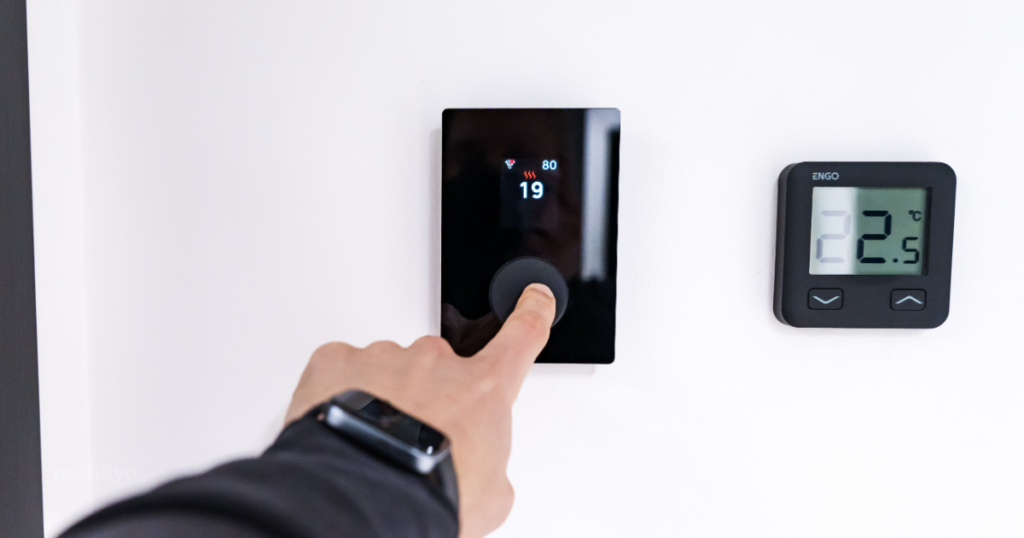
If you’re serious about how to save money on power bill totals, your thermostat is the first thing to look at, not the last.

Summer Cooling Tips That Actually Move the Needle
Set your thermostat to 78°F when you’re home and a few degrees higher when you’re out.
Every degree above that baseline can trim your cooling costs, so it’s worth testing what you can tolerate before you cave and drop it back down.
Ceiling fans help more than people think.
Set them to spin counterclockwise in summer so they push cool air down instead of just stirring warm air around. That lets you bump the AC up a degree or two without actually feeling warmer.
Close vents and doors in rooms you’re not using.
There’s no reason to cool a guest room nobody’s sleeping in.
I also keep blinds shut during the hottest part of the day, since a big chunk of unwanted heat comes in straight through the windows.
Don’t skip your AC filter.
A clogged one makes the whole system work harder, which shows up on your bill whether you notice it or not.
Winter Heating Tips That Actually Move the Needle
For winter, aim for 68°F while you’re awake and active, then let it drop a bit at night under a blanket.
If that feels too cold at first, wear a layer before you touch the dial. It genuinely helps.
Sealing drafts around doors and windows is one of the cheapest fixes that makes the biggest difference.
Weatherstripping costs almost nothing and stops warm air from leaking out around the frame.
If you’ve got a smart thermostat, let it learn your schedule so it’s not heating an empty house all day.
Holiday season adds its own energy costs too, especially with lights running for hours every night.
Putting them on a timer keeps them from burning all night long, which is one of many small habits I cover in How to Save Money for Holidays.
Between smart heating habits and smart holiday habits, winter doesn’t have to wreck your budget.
Lowering Your Water Heating Bill
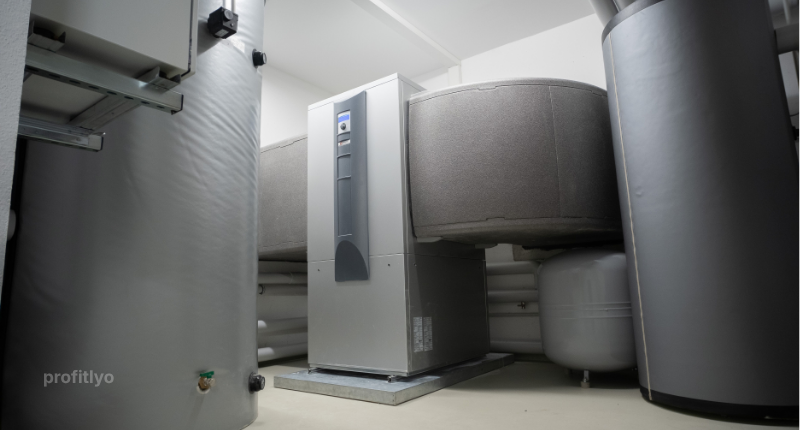
Water heating is usually the second biggest chunk of your bill, right behind heating and cooling.
The fix is simpler than people expect.
Turn your water heater down to 120°F.
Most units come preset at 140°F, which wastes energy heating water hotter than you’ll ever actually use.
This single adjustment is one of the most overlooked answers to how to save money on power bill costs, and it takes about five minutes.
Wash clothes in cold water when you can.
Modern detergents are built for it, and your washing machine handles cold cycles just fine.
If you’ve got exposed hot water pipes running through a basement or crawlspace, wrapping them in cheap foam insulation keeps the heat in and cuts down on how long you wait for hot water at the tap.
A water heater blanket is another low cost fix if the tank feels warm to the touch on the outside.
It’s a small one time cost, and it’s exactly the kind of unglamorous change that actually moves the needle on how to save money on power bill totals over a full year.
Killing Vampire and Standby Energy Drains
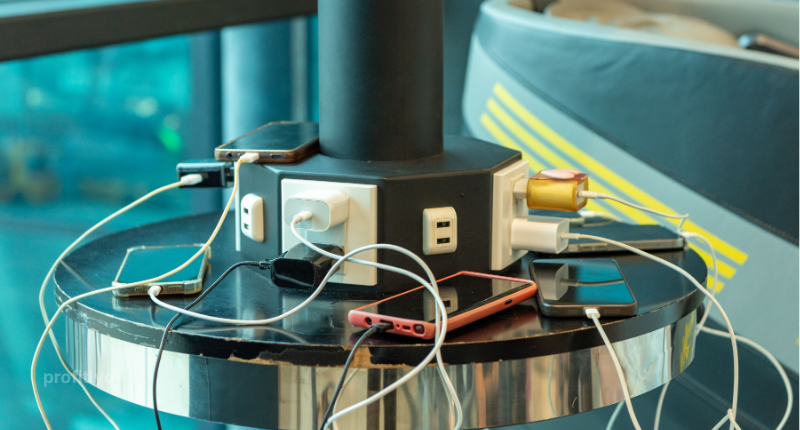
Vampire power is the electricity your devices pull even when they’re switched off or sitting idle.
It sounds minor, but it can quietly add somewhere between $150 and $200 a year to an average home’s bill.
TVs, cable boxes, game consoles, and phone chargers are the usual suspects.
Plugging them into a smart power strip lets you cut power to all of them at once instead of unplugging each one by hand.
If you want to know exactly where your money is going, a plug in energy monitor will show you which devices are drawing power around the clock.
This isn’t the biggest lever in how to save money on power bill totals, but it’s one of the easiest to fix once and forget.
Combined with the heating, cooling, and water heater changes above, it’s a meaningful piece of how to save money on power bill strategy overall.
Smart Appliance Habits That Cut Your Power Bill
Only run the dishwasher and washing machine when they’re full.
Both use roughly the same amount of energy and water whether they’re packed or half empty, so partial loads just waste money for no reason.
An air fryer or toaster oven is a smart swap for your regular oven on hot days.
It heats up faster, uses less energy per meal, and doesn’t warm up the whole kitchen the way a full sized oven does. That last part matters more than people realize, since a hotter kitchen means your AC has to work harder too.
These small kitchen swaps are an easy piece of how to save money on power bill planning without overhauling your whole routine.
If your fridge is more than fifteen years old, it’s worth checking how much power it’s actually pulling.
Older units can use two to three times the electricity of a newer, efficient model, quietly driving up your bill every single month.
Batch cooking is another simple habit, since running the oven once for several meals beats heating it up night after night. It’s one of the simplest habits for how to save money on power bill costs over the course of a year.
For more ways to stretch your grocery budget alongside your energy bill, I put together How to Save Money at the Grocery Store.
Summer vs Winter Power-Saving Tips at a Glance
Some fixes only make sense in one season, while others work year round.
Here’s how the main strategies for how to save money on power bill costs break down by time of year.
| Category | Summer Tip | Winter Tip | Realistic Savings Range |
|---|---|---|---|
| Thermostat | Set to 78°F or higher | Set to 68°F or lower | 5% to 15% on cooling or heating |
| Windows | Close blinds during peak sun | Seal drafts, layer curtains at night | Varies by home, often overlooked |
| Fans | Counterclockwise to push air down | Reverse clockwise to push warm air down | Small but adds up over months |
| Water Heater | Lower to 120°F | Lower to 120°F, add insulation blanket | 4% to 22% on water heating |
| Laundry | Cold water, full loads only | Cold water, full loads only | Modest but consistent monthly savings |

Small Behavioral Changes That Add Up on Your Power Bill
Running your dishwasher or laundry during off-peak hours can lower what you pay per kilowatt hour if your utility charges variable rates.
Check your bill to see if peak pricing applies where you live.
Ask about a budget billing plan too.
It averages your usage across the year into one flat monthly payment, so you’re not blindsided by a huge bill in July or January.
It doesn’t reduce your actual usage, but it makes how to save money on power bill planning a lot easier when your payment is predictable.
A one time or free energy audit from your utility company can point out exactly where your home is leaking money, whether that’s poor insulation, an aging HVAC system, or a water heater working harder than it should.
And if you want to track your progress, a plug in energy monitor shows real numbers instead of guesses, the same disciplined tracking that helped me How to Save Money for a Car Fast.
Frequently Asked Questions
What runs up your electric bill the most?
Heating and cooling are the biggest factors, usually accounting for close to half of a typical bill. Water heating comes in second, and together they explain most of what you can control on how to save money on power bill totals. Everything else, like lighting and small electronics, plays a smaller role by comparison.
What’s the best way to keep your electric bill down?
There’s no single fix. The most effective approach to how to save money on power bill costs is combining thermostat adjustments, water heater changes, and cutting standby power, rather than relying on just one habit.
Does turning off lights really save electricity?
A little, but not as much as people assume. LED bulbs use so little power that flipping a switch on and off saves pennies at most. It’s still a good habit, just not where the real savings live.
Does leaving the TV on increase my electric bill?
Yes, though modern TVs use relatively little power compared to heating or cooling. The bigger issue is standby mode, since many TVs and cable boxes draw power even when they’re switched off.
How much does it cost to run a TV for 12 hours?
It depends on the model, but most modern TVs use somewhere between 80 and 400 watts. Over 12 hours, that typically adds up to a modest amount, usually well under a dollar at average electricity rates.
What wastes the most electricity in a house?
Inefficient heating and cooling usage tops the list, followed by an older water heater or fridge running harder than it needs to. Getting these two systems right is the real answer to how to save money on power bill costs long term.
Closing
Cutting your power bill doesn’t come down to one trick.
It’s the thermostat, the water heater, the standby drains, and small habits stacked together.
Start with one or two changes and build from there. If you’ve trimmed everything here and want more breathing room, growing your income helps too, like the ideas in 35 Best Side Hustles for Teens to Make Money in 2026.
Small changes remain the most reliable way to how to save money on power bill totals.