
Six months ago I stood in a checkout line and watched my total climb past $180 for what used to cost me $130.
I felt that little gut punch everyone gets these days.
That moment pushed me to actually figure out how to save money at the grocery store instead of just complaining about prices online.
I tried a bunch of things. Some worked great.
Some were a total waste of time.
This guide is everything I learned, broken into real steps with real numbers, not vague tips you have already heard a hundred times.
By the end I was saving close to $280 a month on groceries for my household.
I will show you exactly how, step by step, so you can build a routine that fits your own kitchen and your own budget.
Why Grocery Prices Feel Impossible Right Now
It is not just you.
Food prices have climbed hard over the past few years, and staples like meat, eggs, and dairy have jumped even faster than everything else on the shelf.
Add in inflation, supply chain hiccups, and stores quietly shrinking package sizes while keeping the price the same.
It adds up to a grocery bill that feels impossible to control no matter how careful you are.
The good news is that most of the damage comes from a handful of fixable habits: shopping without a plan, buying whatever looks good in the moment, and never checking what is actually on sale before building meals around it.
Once you fix those habits, the savings come fast, and they compound.
I am living proof of that, and I will walk you through exactly what changed for me.
How I Started Figuring Out How to Save Money at the Grocery Store
I did not have some dramatic wake up moment.
It was just a slow build of annoyance every time I checked my bank statement and wondered where the money actually went.
I started small.
I kept my receipts for two weeks and looked at where the money went, line by line.
Turns out almost 30 percent of my grocery spending was stuff I never planned to buy. Snacks I grabbed walking past an endcap. A “quick” trip that turned into $60 because I had no list and no plan.
That is when I got serious about learning how to save money at the grocery store instead of just hoping my bill would magically shrink on its own.
I built a simple system, tested it for a few months, and I am sharing the exact version that stuck.
Step 1: Plan Your Meals Before You Even Open the Fridge

This is the single biggest thing that changed my grocery bill.
Before I even think about shopping, I sit down for ten minutes and plan out five or six dinners for the week.
I start by checking what I already have.
Half a bag of rice, some frozen chicken thighs, a jar of salsa that needs using up.
Building meals around what is already in my kitchen means I am not buying duplicate ingredients I forgot were sitting in the pantry.
Then I fill in the gaps.
If I am short on vegetables for three of the meals, that goes on my list. Nothing else does.
This one habit alone saved me around $70 a month.
It sounds too simple to work, but skipping the “what’s for dinner” panic at 5 p.m. is what stops most impulse takeout orders and last minute convenience store runs.
If your grocery budget feels tight because money is stretched thin everywhere, this step matters even more.
I wrote a full guide on how to save money fast on a low income if you are trying to make every dollar count right now.
One more thing that helped: keep your meal plan realistic. Match the meal to the energy you will actually have, or you will end up ordering takeout and wasting the groceries you already bought.
Estimated savings: ~$70/month
Step 2: Make a List (and Actually Stick to It)
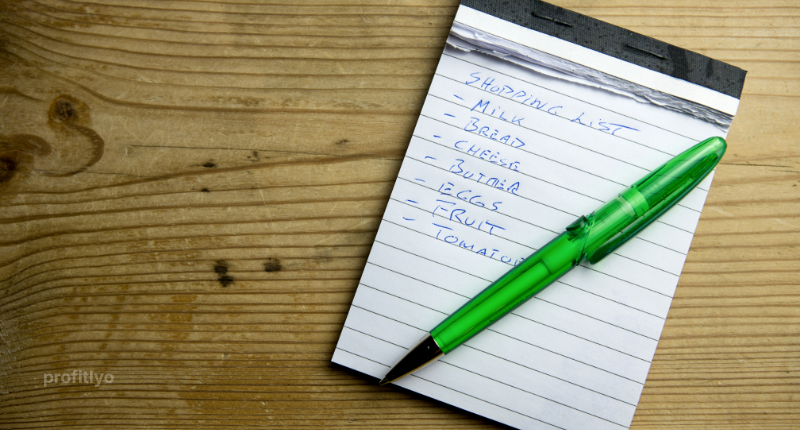
A meal plan without a shopping list is just a nice idea that falls apart the second you walk into a store.
I learned this the hard way after “just grabbing a few things” turned into a $90 trip more than once.
Now I write my list out by section, produce first, then dairy, then pantry, then meat.
I shop the same store most weeks, so organizing my list this way means I am not backtracking across the store picking up random stuff along the way.
Here is the part that made the biggest difference though. I started shopping alone. When my partner comes along, our cart somehow fills up with chips, a candle, and snacks nobody asked for.
Solo trips keep me focused on the list and nothing else.
Online shopping or curbside pickup helps too.
You cannot impulse buy something sitting on a shelf if you never walk past the shelf in the first place.
This is one of the most underrated pieces of how to save money at the grocery store.
A list feels almost too basic to matter, but it is the single cheapest habit on this entire list, and it saved me close to $60 a month just by cutting out the stuff I never actually needed.
Estimated savings: ~$60/month
Step 3: How to Save Money at the Grocery Store With the Sales Flyer
Most people glance at the sales flyer, maybe circle a coupon, and move on.
I started doing the opposite.
I build my entire meal plan around what is actually on sale that week, before I decide on a single recipe.
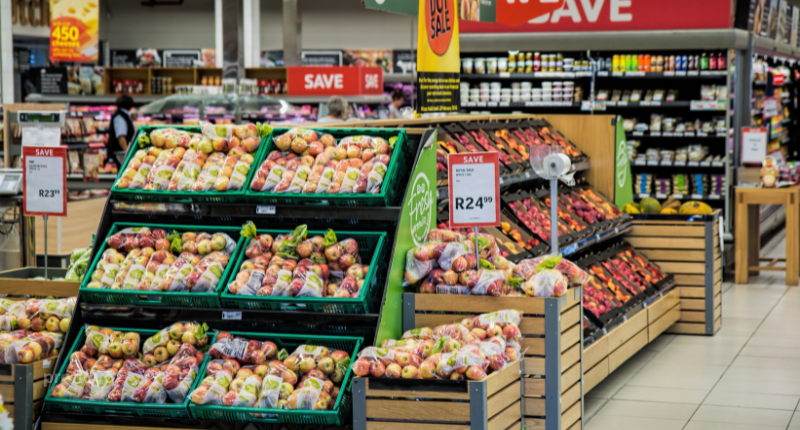
Before I make my list, I check my store’s flyer or app and see what proteins and produce are discounted. If chicken thighs and broccoli are marked down, that becomes Tuesday’s dinner.
If salmon and asparagus are on sale, that becomes Thursday’s meal instead.
This flipped my whole approach.
Instead of deciding what I want to eat and hoping it is not overpriced, I let the discounts decide the menu. Almost everything I buy that week is already discounted before I even step into the store.
Most stores also have a specific day of the week when new sales kick in, often midweek.
Learning that day for my local store meant I could catch both the tail end of last week’s deals and the start of new ones in the same trip.
This approach to how to save money at the grocery store is honestly the one that surprised me most.
It is not glamorous, but building meals around real discounts instead of cravings saved me close to $85 a month, and the food quality never dropped.
Estimated savings: ~$85/month
Best Grocery Apps for Saving Money
Once I had my planning and list habits locked in, apps became the icing on top. These are the ones that actually earned their spot on my phone, not just ones I downloaded once and forgot about.
Ibotta and Fetch are my go to for cashback.
Ibotta lets you pick specific offers before you shop, while Fetch scans your receipt afterward and finds rebates automatically.
I run both, since they sometimes catch different deals on the same trip.
Flipp pulls together sales flyers from every store near you in one place, so I can compare prices before deciding where to shop that week.
Upside gives cashback on gas and select grocery purchases, and Is That a Good Price tells you whether a shelf price is actually a deal or just a markdown on an inflated price.
If you shop at Walmart or Target regularly, Brandclub is worth setting up too, though it takes a little longer to learn than the others.
None of these apps alone will transform your grocery bill.
But layered with a list and a meal plan built around sales, they added another $30 to $40 a month in cashback I would have otherwise left on the table.
If you like squeezing extra value out of apps like these, you might also enjoy my breakdown of 21 best passive income apps that actually pay, since a few of the same principles about layering small wins apply there too.
Estimated savings: ~$35/month
Step 4: Rethink Where You Shop
For years I only shopped at one big traditional supermarket out of habit.
Once I started comparing prices across stores, I realized that habit alone was quietly costing me a lot of money.
Switching even half my shopping to a discount grocer like Aldi made an instant difference.
Their store brands are shockingly close in quality to name brands, and the store layout is smaller, so I am in and out in twenty minutes instead of an hour.
For bulk items like rice, spices, and produce, I also started checking my local international market. Ingredients that cost $6 at my regular store often ran $2 to $3 there.
Warehouse clubs are another piece of the puzzle if your household is big enough to use up bulk quantities before they go bad.
Between Aldi runs and the occasional warehouse trip, learning how to save money at the grocery store became less about clipping coupons and more about choosing the right store for the right item.
This step alone, splitting my shopping between two or three stores instead of one, saved me close to $90 a month.
I actually covered some smart, specific swaps like this in more depth in my other post on what are smart ways to save money on groceries, if you want to go even deeper on the store brand and swap side of things.
Estimated savings: ~$90/month
Step 5: Buy Generic and Rethink Your Protein
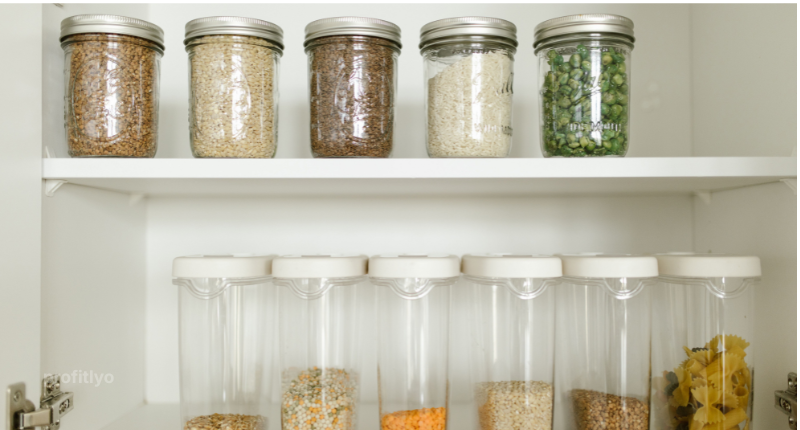
Meat is usually the most expensive line item on any grocery bill, so this is where I found some of my biggest wins.
I started buying generic and store brand versions of almost everything except a small handful of items I am genuinely picky about.
For pasta sauce, canned goods, spices, and dairy, the store brand is nearly identical, and the savings add up fast across a full cart.
Protein took a bigger mindset shift.
I started building more meals around beans, lentils, and eggs, and treating meat as an accent instead of the main event.
A pot of seasoned black beans with rice costs a fraction of what a chicken dinner does, and my family genuinely likes it just as much.
When I do buy meat, I watch for the markdown shelf.
Most stores discount meat nearing its sell by date, and as long as you cook or freeze it that same day, the quality is completely fine.
This protein swap is one of the most practical parts of how to save money at the grocery store, because it does not feel like a sacrifice once you find a few go to recipes.
Between the store brand switch and rethinking protein, this saved me around $95 a month on its own.
Estimated savings: ~$95/month
Step 6: Buy in Bulk (the Smart Way) and Avoid Food Waste
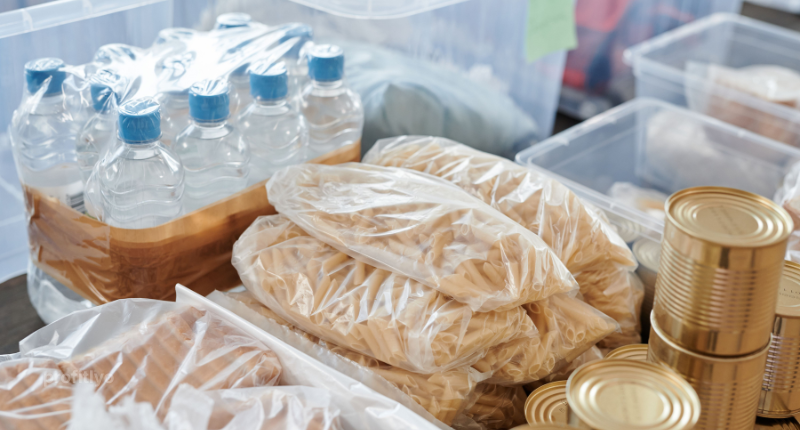
Bulk buying gets a bad reputation because people assume it always leads to waste.
Done right, it is actually one of the most reliable ways to lower your bill without changing what you eat.
I only buy in bulk for things that last a long time or freeze well.
Rice, dried beans, canned goods, and coffee sit in the pantry for months. Chicken, ground beef, and bread all freeze perfectly if portioned out the same day you buy them.
This is where a lot of people trying to figure out how to save money at the grocery store go wrong.
They buy bulk meat, toss it in the fridge instead of the freezer, and end up throwing half of it away a week later.
That is not saving money, that is delaying the waste.
My system now is simple.
The day I get home, I portion meat into meal sized bags and freeze what I will not use in the next two days.
Vegetables close to going bad get chopped and frozen too.
Shopping my own freezer first, before adding anything new to the list, has also cut down on duplicate purchases.
Between smarter bulk buying and cutting food waste, I am saving close to $75 a month, and barely anything gets thrown out anymore.
Estimated savings: ~$75/month
Step 7: Avoid Impulse Buys at the Grocery Store
Even with a perfect list and a full pantry, impulse buys can quietly wreck a grocery budget.
This was my biggest weakness for a long time.
The single most effective fix was never shopping hungry.
Every time I walked in on an empty stomach, my cart ended up with snacks I had no plan for. Now I eat something small before I leave the house, every single time.
Sticking to the perimeter of the store also helps.
Produce, dairy, and meat are usually along the outer walls, while the middle aisles are packed with processed snacks designed to catch your eye.
I stay focused on my list and only cut into the middle aisles for specific items I actually need.
Online ordering or curbside pickup has become my favorite trick here.
When I order from home, I am looking at a screen and my list, not walking past a bakery display smelling like fresh bread. It removes the temptation entirely.
This last piece of the puzzle, avoiding impulse buys, might be the simplest step in this whole approach to how to save money at the grocery store, but it added another $50 a month once I got serious about it.
Estimated savings: ~$50/month
How Much Can You Realistically Save?
Add up every step and the numbers actually surprised me.
Meal planning saved around $70.
A real shopping list plus solo trips saved $60.
Building meals around the sales flyer added $85.
Grocery apps stacked another $35 on top.
Rethinking where I shop brought in $90.
Buying generic and rethinking protein saved $95.
Smarter bulk buying and less waste added $75.
Cutting impulse buys brought in a final $50.
That adds up to just over $280 a month, without once feeling like I was eating worse or sacrificing meals I actually enjoy.
This is really the core of how to save money at the grocery store.
It is not one magic trick.
It is seven small, boring habits stacked on top of each other until the total becomes impossible to ignore.
If your budget struggles go beyond just groceries, these same planning habits carry over well.
I broke down a similar approach in how to save money as a college student, and a longer term version of this mindset in how to save money for a house, if either applies to you right now.
FAQ: Your Grocery Saving Questions Answered
How can I drastically lower my grocery bill?
The fastest way to drastically lower your bill is to stack habits instead of relying on just one trick.
Meal planning around what you already own, building your list around the sales flyer, and cutting impulse buys together do more than any single coupon ever will.
If you are serious about how to save money at the grocery store, start with meal planning and a real list first.
Those two alone fix most of the leaks in a typical budget before you even touch apps or store swaps.
What is the 5-4-3-2-1 grocery rule?
This is a simple portioning guideline some budget shoppers use to build a week of meals around five proteins, four vegetables, three carbs, two snacks, and one treat.
It is a useful mental checklist when you are standing at the sales flyer trying to decide what to build your week around.
How to grocery shop for a diabetic?
Shopping for a diabetic household pairs well with these same money saving habits.
Focus your cart around lower glycemic staples like beans, lentils, leafy greens, and lean proteins, which tend to be some of the cheapest items in the store anyway.
Buying in bulk and freezing portions also helps you avoid pricier pre-packaged “diabetic friendly” products, since a home cooked meal built around whole ingredients is almost always both healthier and cheaper.
How to survive on $100 a month for food?
This is tight, but doable if you lean hard into rice, beans, eggs, frozen vegetables, and seasonal produce, and skip meat most days of the week.
Meal planning becomes non negotiable at this budget level, since there is zero room for wasted ingredients or impulse buys.
Shopping the markdown shelf for protein once or twice a month can stretch a $100 budget further than people expect, especially if you freeze what you buy immediately.
This is really an extreme version of how to save money at the grocery store, and it also might be worth looking at ways to bring in a little extra income on the side.
My guides on 35 best side hustles for teens to make money in 2026 and 40+ side hustles for college students that actually pay in 2026 cover realistic, low commitment options that pair well with a lean grocery budget like this one.
What is a realistic monthly grocery budget for one person?
For most people in the US, a realistic single person grocery budget lands between $250 and $400 a month, depending on your area and how much you cook from scratch.
If your bill creeps toward the higher end of that range, the steps in this guide bring it back down.
Closing Thoughts
I did not expect a handful of small changes to add up to $280 a month, but that is exactly what happened once I stopped winging it at the grocery store and built a real system.
None of these steps are complicated or require some special skill.
They are just consistent habits, applied every week, until they stack into something that actually moves the needle on your budget.
If you only take one thing from this guide, let it be this.
Planning your meals and building your list around real sales is where almost all the savings start.
Everything else, the apps, the store swaps, the bulk buying, just adds on top of that foundation.
Start with one step this week, even if it is just writing an actual list before you shop.
Once you see how much easier grocery shopping becomes, the rest of this approach to how to save money at the grocery store will feel obvious instead of overwhelming.